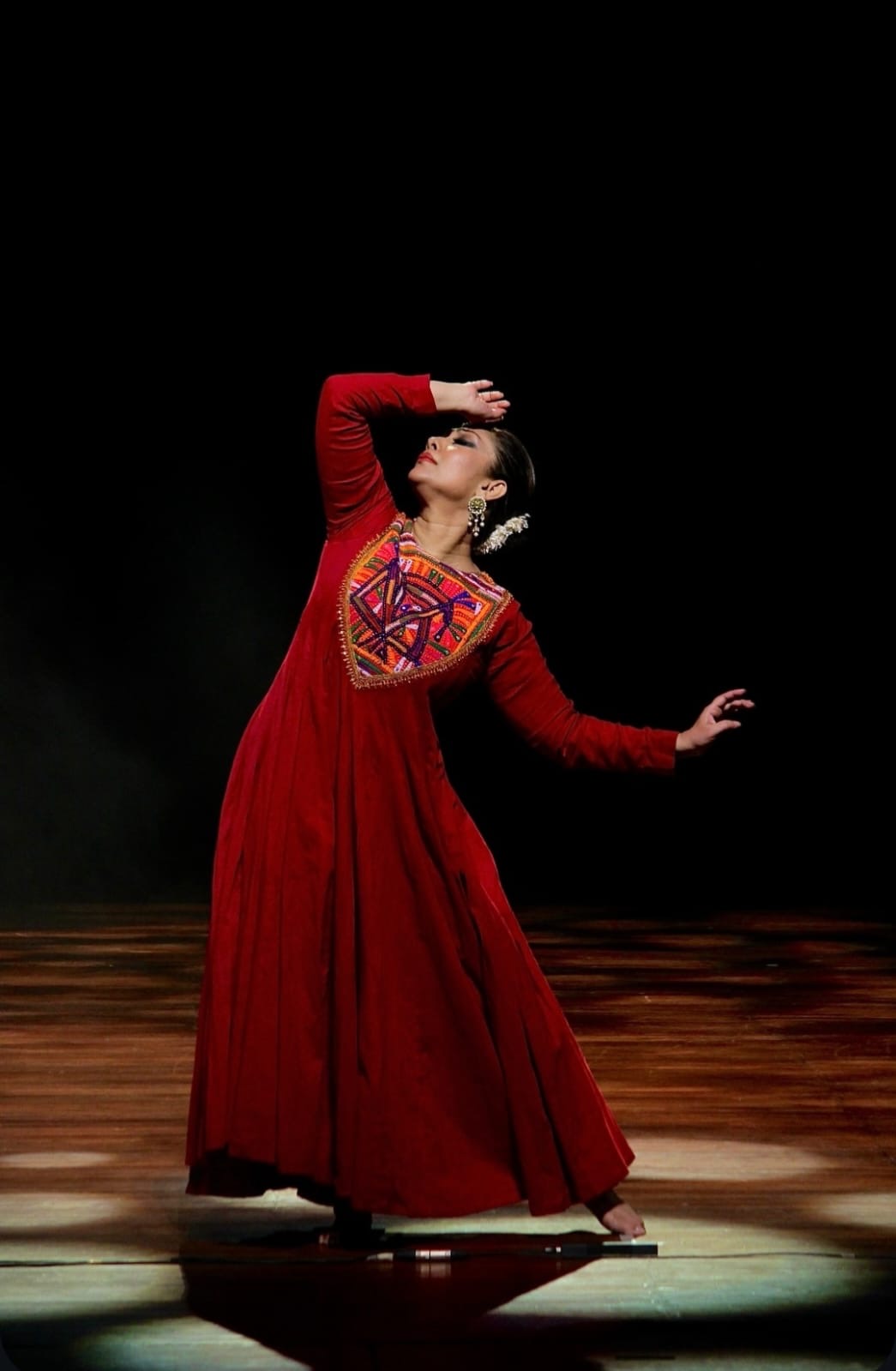
At seven, most children are still figuring out how to tie their own shoelaces. Sanjukta Sinha was falling in love with Kathak. Thirty years on, that love hasn't cooled by even a degree. “Kathak is as important to me as breathing,” she says, without a trace of exaggeration in her voice. “Sanjukta is a dancer and dance is Sanjukta.”
It's the kind of line that could sound rehearsed coming from anyone else. From Sinha, who has performed everywhere from the Royal Opera House in London to the Nita Mukesh Ambani Cultural Centre (NMACC) in Mumbai, and now runs her own dance company out of Ahmedabad, it sounds like the simple truth of a life that never really had a plan B.
What sets Sinha apart from many of her contemporaries, though, isn't just her devotion to the form. It's who she's trying to pass that devotion on to — a generation raised on fifteen-second reels, dopamine loops, and vanishing attention spans, one that popular wisdom insists has no patience left for anything that takes years to learn and hours to watch.
https://www.instagram.com/p/DXmE52WibE2/
Sinha isn't buying that theory. Not for a second.
“I am not combining it with other forms”
Talk to her about making Kathak relevant to younger audiences, and she gets protective almost instantly. “I make it a point to maintain the sanctity of Kathak as a form of dance,” she says firmly. “I am just bringing in a new vocabulary and letting the tradition grow. I am not combining it with other forms.”
She added,“I consider myself Indian at heart and global in spirit. Rooted in tradition yet fearless in creativity, I believe art must breathe and remain alive. I strive to nurture it consistently while also adhering to the mantra of limitless potential. This does not imply the absence of limits but rather a commitment to pushing beyond them.”
It's an important line she draws and a deliberate one. Sinha isn't fusing Kathak with hip-hop or contemporary dance to make it more “Instagrammable.” She's leaving the grammar of the dance exactly as she inherited it. What she's changing is everything around it — the lighting, the sound design, the costumes, the production scale.
She frames this as history simply catching up with itself. Kathak, after all, has always evolved with its stage — from temple courtyards where devadasis once danced, to Mughal courts, to the public proscenium stages of the twentieth century, often performed without the benefit of proper lighting or sound equipment. “Now, we have access to good auditoriums, high-quality sound systems, and premium lighting equipment,” Sinha points out. “The form must also grow with the times.”
The kids are not, in fact, bored.
Ask most people whether Gen Z has any real interest in classical Indian dance, and you'll get a shrug. Sinha's answer is the opposite of a shrug. “I think we are still in a very good space,” she says. “A lot of youngsters want to learn Indian classical dance.”
She talks about dancers trained in completely different styles — hip-hop, salsa, folk — turning up at her shows and telling her they want to learn Kathak too, pulled in, she says, by its “ever-lasting quality.” It's a small but telling detail: the interest isn't coming only from within the classical dance world. It's crossing over.
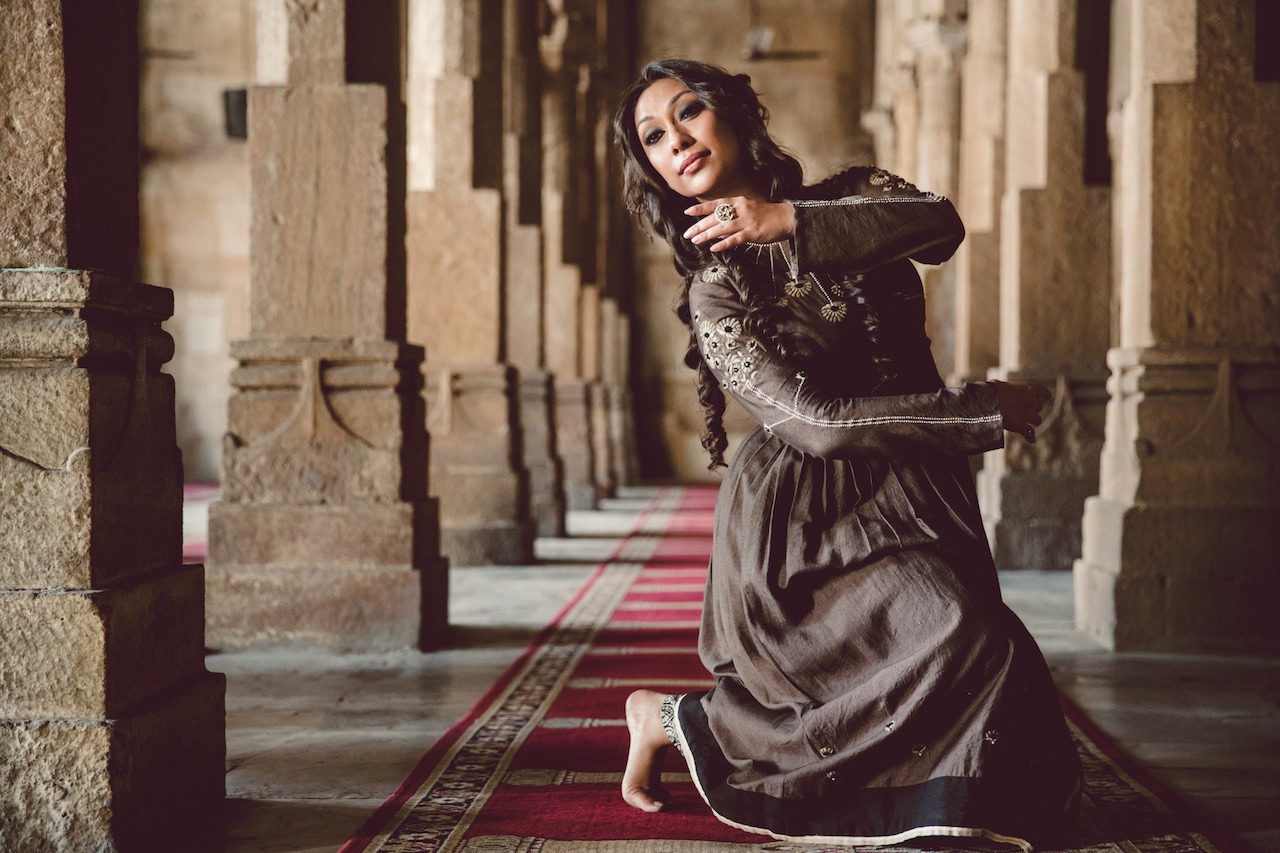
Where Sinha does concede a real challenge, it's not about interest, it's about attention span. “In the age of social media, everybody's patience level has come down,” she admits, adding that children sometimes struggle with the discipline a form like Kathak demands over years, not weeks. Her solution isn't to shrink the art form to fit shorter attention spans. It's to lean on parents. “What parents can do is motivate and encourage them to continue with the classes,” she says. “There is no dearth of interest. The young generation wants to connect with Indian dance and music.”
Putting her money where her mouth is
Sinha isn't just talking theory from the sidelines. She founded the Sanjukta Sinha Dance Company in Ahmedabad in 2019, just months before Covid-19 shut the world down, and has since built it into an institution training students not only across India but also from Japan, London, New Zealand, and Canada. She has also staged three productions at the NMACC, all of which, she says, were well received.
She sees that as part of a larger shift already underway, classical dance moving from the margins of India's cultural programming to its centre stage. “The future looks very bright for Indian classical dance forms,” she says, and it doesn't sound like wishful thinking coming from someone who has spent three decades watching audiences up close.
Old dance, new lights
What Sinha is really offering is a rejection of the false choice between staying pure and staying relevant. She isn't reinventing Kathak to sell it to a distracted generation. She's simply refusing to let it look tired, dated, or under-lit while the dance itself stays exactly as demanding, as disciplined, and as devotional as it always was.
For an audience that's used to being bored within seconds, that might be the real trick — an art form old enough to have survived courts, colonisation and changing fashions, given just enough craft and clarity that it no longer needs convincing. Just a good sound system, better lighting, and someone patient enough to let the rhythm do the rest.